

Public & Cultural
Public space and cultural buildings are the most democratic part of a city and the most honest measure of how civilised a society has become. We approach them through a careful reading of the context — historic stratigraphy, real patterns of use, community — with adjustments that come from the city rather than from formal preferences. Competitions are our laboratory: second prize in the international competition held by the Romanian Order of Architects for Victoria Square in Timișoara, Feroviarilor Park in Cluj (over 53,000 sqm), the Bamiyan Cultural Centre, Rulmentul Brașov, the Craiova Water Park. Alongside them, projects taken through permitting and construction: Săucești Cultural Centre, the Bucharest Cultural Pavilion, museum pavilions, the refurbishment of the British Council headquarters and the regeneration of the Tractorul industrial site. We work with authorities, engineers and communities, with the documentary rigour that EU funding requires, because the existing building stock is a resource.
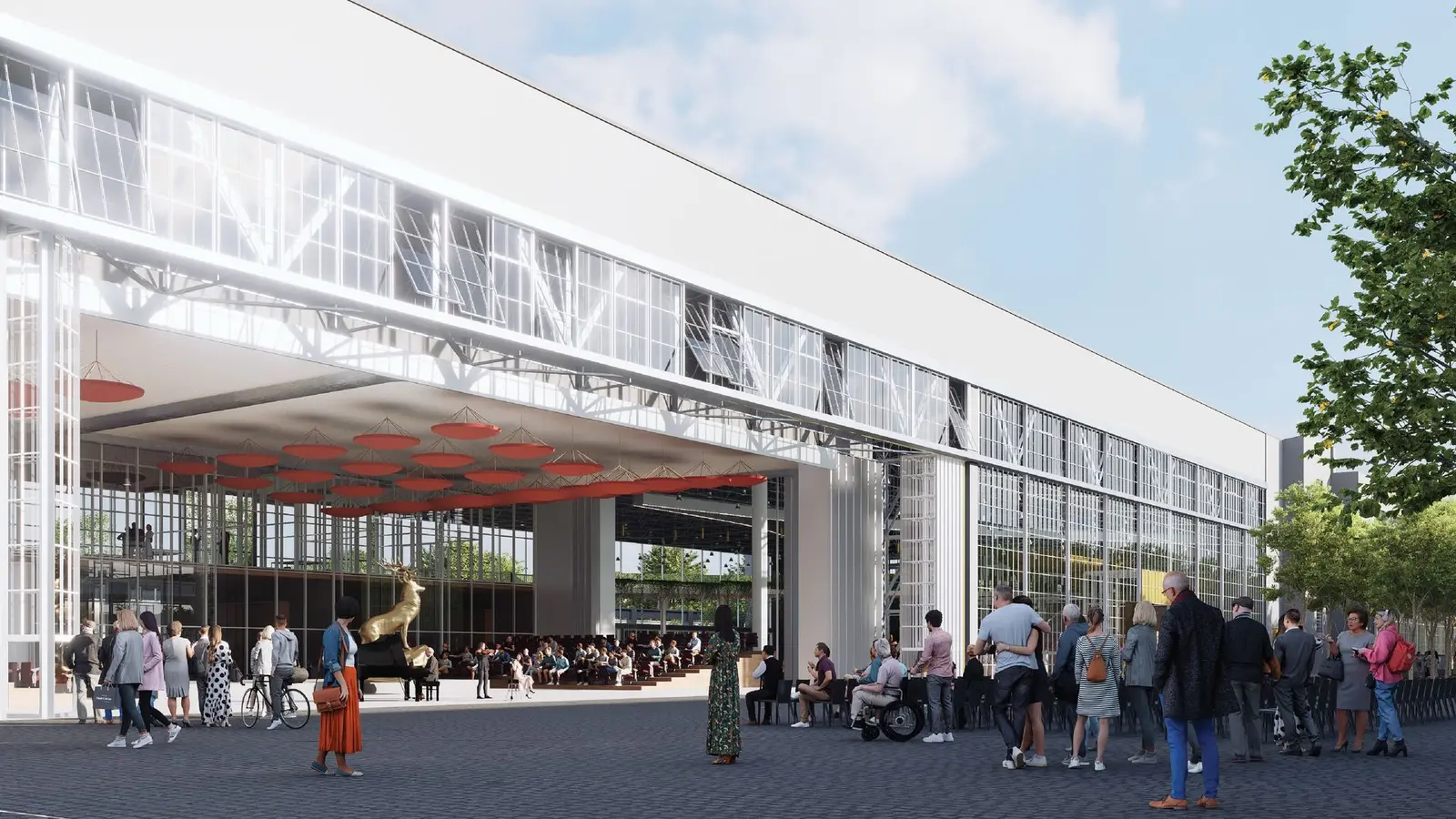
Public space and cultural buildings are the most democratic part of a city and the most honest measure of how civilised a society has become. They do not have one client who uses them, but thousands of people passing through, so every design mistake is visible daily.
We approach them through a careful reading of the context: historic stratigraphy, real patterns of use, community, the routes people have already worn into the ground. The adjustments come from the city, not from formal preferences. Before proposing a shape, we understand who uses the place now, at what hour and why.
Architecture competitions and awards
Competitions are our laboratory. We won second prize in the international competition held by the Romanian Order of Architects for Victoria Square in Timișoara, and we entered Feroviarilor Park in Cluj-Napoca, over 53,000 sqm of public space, the Bamiyan Cultural Centre, the regeneration of the Rulmentul industrial site in Brașov, the Craiova Water Park and the headquarters of public institutions. A competition forces us to argue, not only to draw.
Public projects built
Alongside them we have projects taken through permitting and construction: Săucești Cultural Centre, the Bucharest Cultural Pavilion, museum pavilions, the refurbishment of the British Council headquarters. Smaller in floor area, but with a great deal at stake for the communities that use them.
Documentation for EU-funded projects
Public projects are also played out on administrative ground. We work with the documentary rigour required by EU funding programmes, with fixed deadlines, multiple reviews and the obligation that every quantity be justifiable. We know what a file that passes looks like.
Urban regeneration and industrial sites
Urban regeneration is the most complicated case: industrial sites, abandoned land, buildings emptied of function. Here the project has to propose a reason to come to that place before it proposes architecture, with a phasing that brings people in before the investment is complete. That is how we approached the regeneration of the Tractorul industrial site.
The existing building stock is a resource, not an obstacle. Restoration, structural strengthening and conversion of buildings with historic or industrial value preserve the memory of a place and at the same time reduce the carbon footprint of the intervention.
We work with authorities, engineers, restoration specialists and local communities. Public consultation is not a formality: projects that are not understood are not maintained either.
Accessibility and maintenance costs
For public buildings we pursue real accessibility, durability in use and maintenance costs that a municipality or an institution can carry over the long term. A good public space is one that still looks good after ten years of intensive use.
Detail matters more here than in any other programme, because wear is continuous: paving that does not shift, edges that survive, street furniture that can be repaired piece by piece, planting that lives without permanent irrigation.
If you are preparing a competition entry, a funding application or a cultural project, write to us.